Dedication: Márta Fábián
Premiere location: Budapest
Premiere date: 1974.10.02.
Premiere performers: Márta Fábián, cimbalom
Composition end date: 1973.10
Genre: Instrumental solo
Instrumentation: cimbalom
Duration (minutes): 7
Year of publication: 1976
Publisher: Editio Musica Budapest
Publication number: Z. 7563 – ISMN: M-080-07563-0
1. Molto agitato
2. Sostenuto
3. Vivo
4. Mesto (In memoriam Stefan Romaşcanu)
It is an instrumental work with no text.
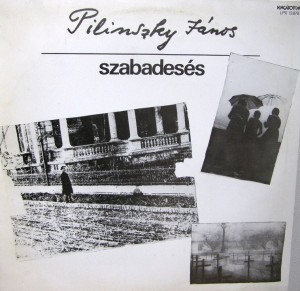
The catalog number “Op. 6” was originally assigned to the cycle Cinque Merrycate, composed for solo guitar in 1962; however, Kurtág ultimately withdrew the piece. In 1973, he arranged two movements from it for cimbalom and expanded the work with two new movements. The composer borrowed the title “Splinters” from János Pilinszky’s 1972 poetry collection of the same name, paying homage to a poet who was especially important to him in the 1970s. The crowning jewel of the cycle is the slow final movement, in which Kurtág commemorates his former fellow student, sonata partner, and friend, the young Romanian violinist Stefan Romaşcanu, who died prematurely.
(Via EMB)
No sheet music files available for this piece.
Reviews of the premiere
Péter Várnai: A Musical Letter – The Music of Our Time
(Magyar Hírlap, October 5, 1974)
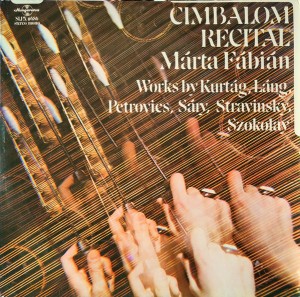
Márta Fábián, the young cimbalom player, was the star of Wednesday’s chamber music evening. The spirit and tradition of Aladár Rácz, the instrument’s greatest master, live on in her. She is already a great master of rhythm and color. It is understandable that she presented three new Hungarian works in a single program; such artistry always inspires composers to create. György Kurtág’s new work is, once again, a masterpiece. It has a strange title: Splinters. However, the four-movement piece is not “splintered” at all– quite the opposite. Dramatically tense movements, alive with rhythm and lines, alternate with beautiful lyrical music, which emerges and fades with soft colors and deep lyricism. The first three movements contrast sharply with one another, while the fourth contains its own contradictions, rounding out the form that is always magnificent in Kurtág’s work. The fading, pastel-colored closing section is especially captivating for the listener.
(Magyar Hírlap 7 [1974]/274, 10.)
__________
János Breuer: Music Chronicle
(Népszabadság, October 9, 1974)
György Kurtág’s “old-new” work was composed for the cimbalom – an instrument elevated to classic status by Aladár Rácz – and for the passionate performer Márta Fábián. Its title is “Splinters”, and this music seems to echo the moods of János Pilinszky’s poetry collection of the same name, especially the poem titled “Metronome”: “Measure time, / but not our time, / the motionless present of splinters, / the steps of the drawbridge, the snow on the execution ground in winter, / the silence of paths and clearings /...” In this piece, written between 1962 and 1973, silence is undoubtedly the key dramaturgical element; its restless, dramatic gestures also seem to allude to this, and the fading chimes of the closing movement – which continues the tone of great folk laments and recreates them on instruments – simultaneously outline the contours of a barely tangible, pure, and intimate image of nature. Beautiful music created by a true poet.
(Népszabadság 32 [1974]/236, 7.)
__________
Kroó György kritikája
(The New Hungarian Quarterly, 1975.)
[…] Finally, the cimbalom also appeared onthe programme as a solo instrument. György Kurtág, the initiator of the contemporary renaissance of the instrument, entrusted it with his poetic message in four short movements linked into a cycle entitled “Splinters” which were composed over a period of adecade (1962–73). Great skill and inventionare required to play these aphorisms satisfactorily; the earlier ones run in rapid tempo[,] thirty to forty seconds, and the new slower ones condense their marvellous wealth into one or two minutes. The forms scarcely have time to develop, or the motifs to pair off and the contrasts to come into opposition. Nevertheless, by the time the vision disappears, it is unforgettable. In this microworld a hexatonic dolce melody is an enormous event; the dialogue of fortissimo clashing, ringing accords and pianissimo vibrations is captivating against the background of a fluttering scherzo played upon three different themes; ultimately everything becomes a mere preliminary, a line of brief moments in life, which must recede when the hour of death approaches. The fourth movement (labeled Mesto, just as the Finale of Bartók’s String Quartet No. VI) is a folklament which is sung amids the ringing of bells[,] first a remembering and then a burial. It is an emotionally shaking, beautiful experience. And it is also a ceremonious moment in the history of the cimbalom to again have been selected by a poet to be his spokesman.
(„The Hungarian Cimbalom”, The New Hungarian Quarterly 16 [1975]/59, 218–220.)
No sheet music files available for this piece.