Subtitle: Six choruses to poems by Mikhail Lermontov, Aleksandr Blok, Sergei Esenin, Osip Mandelshtam, Anna Akhmatova and Marina Tsvetayeva, for double mixed choir and instruments, in Russian
Dedication: “Зине, которая так терпеливо, тонко и изящно дала мне пoнять и пoлюбить русский язык и привела меня к этим чудесно-горьким стихотворениям.” [To Zina, who with so much patiente, gentleness and perfection briliantly made me understand and love the Russian language, and led me to these wonderful-bitter poems.]
Premiere location: Amsterdam
Premiere date: 1995.06.29.
Premiere performers: Monteverdi Choir, Schönberg Ensemble, members of the English Baroque Soloists, conducted by John Eliot Gardiner
Lyricist name: Mikhail Lermontov, Aleksandr Blok, Sergei Esenin, Osip Mandelshtam, Anna Akhmatova, Marina Tsvetayeva
Language: Russian
Composition end date: 1994
Genre: Choruses
Instrumentation: double mixed choir, horn, trumpet, trombone, harp, piano, celesta, harmonium, baian, timpani, gong, maracas, tubular bell, suspended cymbal, cymbal, tam-tam, bass drum, violin, viola, violoncello
Duration (minutes): 25
Publisher: Editio Musica Budapest
Publication number: Z. 14077
1. М Ю. Лермонтов: И скучно и грустно
2. А. А. Блок: Ночь, улица, фонарь, аптека
3. С.А. Есенин: Вечером синим
4. О.Е. Мандельштам. Куда мне деться в этом январе?
5. А. А. Ахматова: Раcпятие
6. М. Цветаева: Пора…
______
1. Mikhail Lermontov: So weary, so wretched
2. Alexander Blok: Night, an empty street, a lamp, a drugstore
3. Sergei Yesenin: Blue evening
4. Osip Mandelstam: Where can I go to in this January?
5. Anna Akhmatova: Crucfixion
6. Marina Tsvetaeva: It's time
1. М Ю. Лермонтов: И скучно и грустно
И скучно и грустно, и некому руку подать
В минуту душевной невзгоды ...
Желанья !... что пользы напрасно и вечно желать ?...
А годы проходят – все лучшие годы!
Любить !... но кого-же ?... на время – не стоит труда,
А вечно любить невозможно.
В себя ли заглянешь? – там прошлого нет и следа:
И радость, и муки, и все там ничтожно.
Что страсти? – ведь рано иль поздно, их сладкий недуг
Изчезнет при слове рассудка;
И жизнь, как посмотришь с холодным вниманьем вокруг,
Такая пустая и глупая шутка ...
(1840)
2. А. А. Блок: Ночь, улица, фонарь, аптека
Ночь, улица, фонарь, аптека,
Бессмысленный и тусклый свет.
Живи еще хоть четверть века -
Все будет так. Исхода нет.
Умрешь - начнешь опять сначала,
И повторится все, как встарь:
Ночь, ледяная рябь канала,
Аптека, улица, фонарь.
(1912)
3. С.А. Есенин: Вечером синим
Вечером синим, вечером лунным
Был я когда-то красивым и юным.
Неудержимо, неповторимо,
Все пролетело ... далече ... мимо ...
Сердце остыло, и выцвели очи ...
Синее счастье! Лунные ночи!
(1925)
4. О.Е. Мандельштам. Куда мне деться в этом январе? (Воронеж)
Куда мне деться в этом январе?
Открытый город сумасбродно цепок ...
От замкнутых я, что-ли, пьян дверей? –
И хочетсь мычать от всех замков и скрепок.
И переулков лающих чулки,
И улиц перекошенных чуланы,
И прячутся поспешно в уголки,
И выбегают из углов угалны.
И в яму, в бородавчатую темь
Скольжу к обледенелой водокачке
И, спотыкаяс, мертвый воздух ем,
И разлетаются грачи в горячке.
А я за ними ахаю, крича
В какой-то мерзлый деревянный короб:
– Читателя! Советчика! Врача!
На лестнице колючей разговора б!
(1937)
5. А. А. Ахматова: Раcпятие
Магдалина билась и рыдала,
Ученик любимый каменел,
А туда где молча мать стояла
Так никто взглянуть и не посмел.
(1939)
6. М. Цветаева: Пора…
Пора снимать янтарь,
Пора менять словарь,
Пора гасить Фонарь
Наддверный ...
(1941)
_______
1. Mikhail Lermontov: So weary, so wretched
So weary, so wretched, and no one to stretch out my hand to,
In times when the soul is despondent...
Heart's yearnings! What sense is there yearning forever in vain?
And years, they are passing- the best of my summers!
To love! Ah, but whom? A fleeting affair is not worth it,
While true love cannot be eternal.
Look deep in your heart; no trace you will find of the past,
No joy and no torment - just catchpenny trifles.
And passions? Well, sooner or later their sweet sickness dies,
Dissolved by the cold words of reason;
And life, when you carefully look at what lies all around,
Is empty and futile, a fatuous joke.
(1840)
2. Alexander Blok: Night, an empty street, a lamp, a drugstore
Night, an empty street, a lamp, a drug-store
Meaningless and pallid light.
Live out another quarter-century -
All stays the same. There's no way out.
You die. And start once more the treadmill,
Repeating, endless, all that's past:
Night, icy ripples on the canal,
Drug-store, empty street, the lamp.
(1912)
3. Sergei Yesenin: Blue evening
Blue evening, moonlit evening,
Once upon a time I was youthful and fair.
Unconfinable, irrecoverable,
All is over ... far away ... past ...
The heart's grown cold, the eyes have faded ...
(1825)
4. Osip Mandelstam: Where can I go to in this January?
Where can I go to in this January?
The gaping city wildly grabs at me ...
Have all these shuttered doors then made me drunk?
I bellow rage at padlocks, bolts and latches;
At open, yelping stocking-tops of blind alleys
And twisted streets with rotting lumber-stores.
And nameless creatures scuttle out of sight
To bolt out later from their lurking holes;
And, diving deep to dark and scrofulous gloom,
I slither to the frozen water-hydrant
And, stumbling, gasping, swallow stone-dead air;
The rooks fly out in wheeling, clattering frenzy.
Imploring, I bawl after them
Into the freezing hollow of a wooden chest:
– Read what I've written! Help me! Heal my wounds!
– Say me one word upon this jagged stair!
(1937)
5. Anna Akhmatova: Crucfixion
Magdalena beat her breast and sobbed,
The belov'd disciple turned to stone,
But there where stood the Mother, silent,
No one so much as dared to turn his eyes.
(1939)
6. Marina Tsvetaeva: It's time
Take off the necklace now,
It's time to change the words,
Time to turn out the light
Above the door ...
(1941)
(Translated by György Kurtág and Kurt Wölfel)
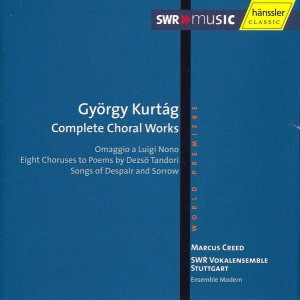
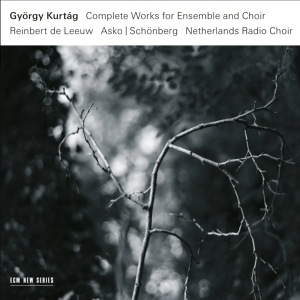
Songs of Despair and Sorrow (Op. 18), is not the first Russian-language piece in Kurtág’s oeuvre, nor is it the composer’s first Russian-language choral work. At the end of the 1970s, the Italian avant-garde composer Luigi Nono suggested that Kurtág compose choral works, and at that time Kurtág was fascinated by the Russian language. “For me, Russian is a sacred language,” he said. His first Russian-language choral pieces are included in the 1979 work Omaggio à Luigi Nono, but in the 1980s he began writing another series of Russian-language choral works. The collection, eventually published as Songs of Despair and Sorrow, was first performed in 1995, conducted by Sir John Eliot Gardiner, but the entire cycle was not performed at that time. The first complete performance of the work was conducted by David Jones a year later. The six movements of Songs of Despair and Sorrow set poems by six different poets to music, in the chronological order of their creation: Mikhail Lermontov, Alexander Blok, Sergei Yesenin, Osip Mandelstam, Anna Akhmatova, and Marina Tsvetaeva. The composition is considered one of the most difficult pieces in choral literature. Kurtág once said about composing for choir: “There is something mysterious about choirs; the moment I start writing for a choir, all hell breaks loose. At that point, I do not care about anything else.” Op. 18 is one of the most important pieces for Kurtág himself. He once said about it: “That is my Missa solemnis.”
No sheet music files available for this piece.
No sheet music files available for this piece.