“A kind of baptism by fire”
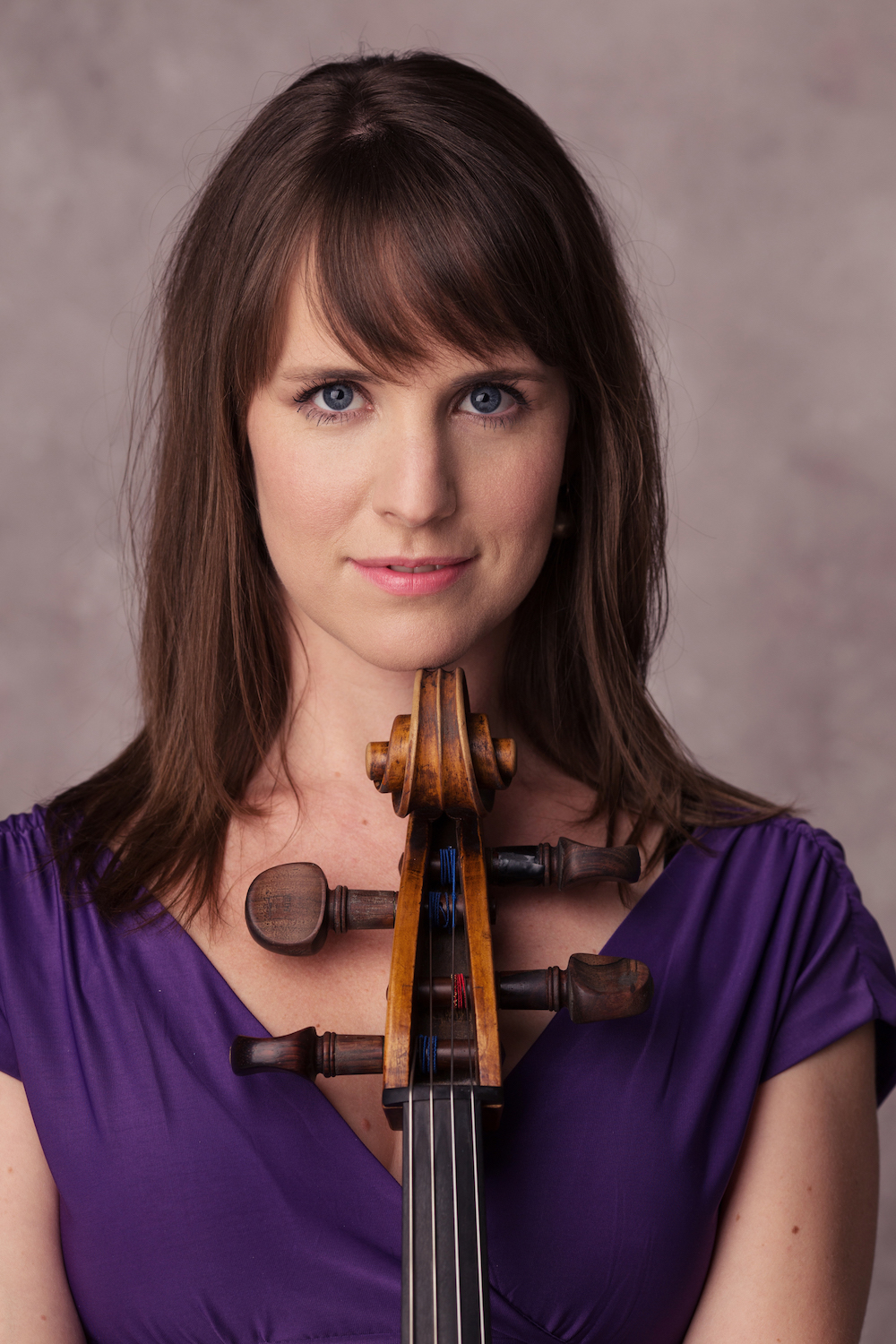
Ditta Rohmann, cellist on György Kurtág. Interview by Máté Csabai.
She met the composer as a family acquaintance, and this may be the reason why his authority did not scare her. With Ditta Rohmann, we talked about why György Kurtág is a poetic personality among his contemporaries, and what his teaching method and his maximalism are about.
How did you meet György Kurtág?
I was still a child when I first participated at the Bartók Seminar and Festival in Szombathely, but I only saw the legendary teacher – about whom so many stories were being told – work only from afar at that time. But I would often hear his name at home, too, since my mother, Júlia Jancsó was almost considered a family member for a while in the Kurtágs’ home. The connection is alive to this day. When the Kurtágs moved back from France, it even became stronger.
What connected him and your mother beyond personal affection?
My mother worked for a long time on the Hungarian translation of Proust’s series of novels In Search of Lost Time, continuing the work of Albert Gyergyai with the later volumes. Uncle Gyuri regarded this as enormous accomplishment. György Kurtág at the time was a particularly reserved person. Moreover, the contemporary music circle he belonged to – the musicians gathering around the New Music Studio, Hungary – existed on the fringes of the official cultural policy of the ‘70s. This dense, exciting intellectual community was formed by László Sáry, András Wilheim, Zoltán Kocsis, Péter Eötvös and others. Perhaps it is the nostalgia of later generations that makes me say that, perhaps, personal and artistic connections were tighter in their time because of the political situation. Kurtág was barely known at the time by the wider public, and he was not surrounded by that international authority that later formed around him. But he was an incredibly important person in this close-knit circle.
What was your first impression of Kurtág at that masterclass?
In the ‘90s, when I first attended it at the age of 11, the Bartók Seminar was considered to be a really exceptional place, a forum of international significance. I really regret that it does not exist anymore in that form. Péter Eötvös taught courses on conducting, György Pauk on playing the violin, and Kurtág worked with performers in his unmistakeable way. I remember when Zsuzsanna Lukin and Gábor Csalog played The Sayings of Péter Bornemisza to him. I listened intently and tensely, because it was not a pleasant experience. Uncle Gyuri was implacable with the artists as well as himself. I think he has had this self-doubt through his whole life, and he is not alone with this among the Hungarian artists of his generation. It is there in the way he speaks, in his stutter, in his search for words – and he is searching for notes in the same way. As if he would not accept anything ready-made. A word, a note, a gesture must be tried and tested time and time again to see if it is indeed true. This ruthless self-examination is there in his works, and it was there in his teaching, too, with the same strength. But it was difficult to experience as a child. Such an intensive attitude is probably a challenge for many adults as well. Uncle Gyuri is the only exception, because he perceives these situations differently, he burns at a different temperature, he recharges from a different place, and time flows differently for him. It was Aunt Márta to tell him every time that, perhaps, the “subjects” should have some rest, too.
I owe a lot to the encounters with Kurtág. One may ask why, since he can be so ruthless. Nowadays, I think that a line must be crossed in order to achieve a certain quality and depth which is impossible to reach in a gentle manner. It is a kind of baptism by fire. If one has experienced it, one can recall it, build on it, draw inspiration from it. Someone who has never undergone it does not even understand what it is all about, and they may only see the image of a guru.
What is it that these unrelenting expectations do and do not help with?
It is difficult to explain to an outsider what a lesson with György Kurtág was like. He could take music apart to its atomic components – and the performer, too. As if he would examine each note and each bar under a microscope. His music also requires this extreme concentration. If one brought a sonata by Beethoven to him, it could easily happen that only the first four bars were discussed in the entire lesson. I talked a lot about this method with musicians of my age. It is brilliant that four bars can be explored to such depths, but then one has to go on stage and play the whole work. András Schiff said about Pál Kadosa that, in his class, the student could play the whole Sonata Appassionata without interruption. But, perhaps, András Schiff is lucky precisely because he was taught in both approaches of pedagogy, and he was encouraged to see the whole structure together as well as to fine-tune the extremely tiny details. The risk of Kurtág’s method is that one can become a prisoner of one’s own doubts as a result of the meticulous, ruthless self-examination.
What have you adopted from Kurtág’s approach?
First and foremost, the notion that one has to fight for every note, they are not easily given. It does not hold the same way for every composer, but Kurtág’s scores cannot be simply “played”. The notation is unconventional, and it is difficult to appraise what weight is carried by what happens between two notes. And Kurtág writes few notes, thus each one is important. Whole worlds, memories, passions, forces are behind them.
Is it right that you studied with him outside of formal education?
Yes, since Kurtág completely stopped teaching at the Music Academy in the ‘90s, one could only work with him in masterclasses or individual lessons. I, too, contacted him individually. I was not paralysed by his harsh criticism, since I knew him from elsewhere: my mother spoke of him as a friend, not as an unapproachable genius. I knew the side of Uncle Gyuri that many did not: with whom one could talk, laugh, joke. I never felt the need to walk on eggshells or that I would be immobilised by his authority. Even though I have enormous respect for him and I regard him as an ingenious composer. Perhaps this was what gave me some natural freedom in my relationship with him from the beginning. I think a performer must preserve their own integrity even when working with such geniuses as György Kurtág or Péter Eötvös. One must be brave enough to remain a musician in their presence, too, and not turn into an executive officer. I have often seen the opposite of this, and I have seen what it is like when someone is too careful to reproduce perfectly what the composer asks. It is as if one were copying an imaginary work instead of recreating it. It does not help with this that Uncle Gyuri expects that a work be played exactly as he imagines it; still, if someone had the courage to think independently, he could accept that. Or perhaps I was only lucky. In the documentary about Kurtág, Pierre-Laurent Aimard closed the piano after a long day, and simply said, “Gyuri, this will do today.” It may seem a simple thing to say, but most musicians would not dare finish a workday with him like so. We cannot help feeling that it is an honour that he works with us, and, anyway, if he can keep up at his age, it would be rather unpleasant if we could not. But, let’s face it: we cannot.
Can you remember a time when you contradicted him?
It has happened that he did not like what I played or how I played it: he goes to the most unexpected concerts at the BMC. One time, I did not accept his criticism, and turned it into a joke with a little self-irony, and I will never forget him saying, “It’s a good thing you have a sense of humour.” If I play Beethoven to him, I know that what he says is Kurtág’s opinion on Beethoven, not Beethoven’s own view. Recently, he has heard Ligeti’s Sonata for Solo Cello in my interpretation. He said, “I think it was too fast, but Ligeti would have liked it.”
Do you consider Kurtág’s advice more important if it is about his own works?
When I was preparing for the recording of my album Solo Cello Portrait, on which there are works by Kurtág, as well as Eötvös and Ligeti, I went to see him, naturally. Aunt Márta was still alive, they received me together. I came with some pieces from Signs, games, messages, particularly with Socrates’s Farewell among others, which was a piece that previously nobody had recorded. When they asked what I had brought and I said Socrates, Aunt Márta replied in a worried voice, “Oh, Gyuri, you did not prepare for that!” I played the piece and they said in the end, “Well, it is good, after all.” If he had “prepared”, probably no note would have remained unscathed. As a teacher, I know well enough the phenomenon to have taught a work so many times that I can almost anticipate the problems for each note when my student plays it. Countless people have played certain pieces by Uncle Gyuri. For instance, many performers bring the Kafka Fragments to him, and he often takes it apart. I am sure it is an exciting process for him to almost recompose his own works at such times. Indeed, he often writes into the score, and many performers have their own version of a Kurtág-piece. What a privilege, isn’t it?
And what about those who do not have this privilege?
Despite the fact that I have had the luck to work with Kurtág several times, it was an incredibly reassuring experience to hear his trios in Switzerland played by some students who had never studied with him. It reassured me because the works sounded right. That is, Kurtág’s music can be understood even if the composer is not there to provide guidance. Although it is possible that Uncle Gyuri would argue with me on this…
After all, for someone’s music to stay alive, this is exactly what is necessary: that genuine approaches on how to perform the music should form without the composer’s personal presence.
Indeed; but it is also important at the same time that those who have studied directly from Kurtág should pass on the knowledge they gained from the original source. I also teach his works to my students.
What does it mean that Kurtág taught chamber music, not composition at the Music Academy?
Uncle Gyuri once said to me that he, in fact, was not a composer, but a performer. This sentence sums up his relationship to composition precisely. There are composers who see the structure in advance, and they build the work as clear architecture. For example, it was said about Sándor Szokolay that he drew the barlines in advance, and he knew: the piece would end at bar 224. Kurtág’s thinking is almost the opposite of this. For him, artwork and performance are not sharply separate. As if the score was never a complete object, but a momentary recording of what he believes to be true about music in that moment. And if he finds something truer the next day, he will, of course, change it.
How does Kurtág’s way of thinking influence you when you are working on other composers’ music?
Since I studied much more with Ferenc Rados, his thinking had a greater influence on me analytically. There are people who learnt to approach Beethoven or Bartók from Kurtág; to me, he gave keys to understand his own music. If I am asked to play a piece by Kurtág now that I have not studied with him, I try to reconstruct it from the score. But in the case of his music, it is really difficult to bring the right gestures to life from the notation alone – that is, all that cannot be notated precisely. Once, we worked on a cello duet, and Uncle Gyuri said at a certain point, “It is like the steps of a dinosaur.” I immediately thought, “Why isn’t this in the score? Everyone understands this!” I could show you some scores by Kurtág in which the same note has two kinds of bowing in two different versions: one down (Π), the other up (V). But notation is only a tool, and it is nearly impossible to put everything down in writing completely. Interpreters are necessary. Perhaps it is Schumann among the great masters of whom this holds true as well – it cannot be a coincidence that Kurtág feels Schumann very close to himself. As Schumann’s unique gestures can be best observed in his vocal music, so can Kurtág’s: in the Kafka Fragments, one can notice what musical gestures are connected to certain words, phrases, mental states, based on the text. The same gestures can be recognised in some of his instrumental works, too. The songs can teach the language that must be heard even in the music without words.
How does Kurtág treat the cello?
He extended what is possible on the instrument to a great degree. Even if he cannot be compared to Zoltán Kodály, who himself was a cellist and defined the cello repertoire of the 20th century, Kurtág also knows the very nature of string instruments intimately, and he puts what they can do to use exhaustively. Needless to say, this means that his pieces are incredibly difficult. In the Double concerto, for instance, the farthest extremes of the cello’s sound are heard: raw, brutal sonority in one moment, then the most ethereal timbres in the other, and sometimes one has to get from one to the other under the span of a couple of seconds. But it is also characteristic of Kurtág that many of his works can be played on other instruments or in another instrumentation.
Miklós Perényi was a defining figure in your professional development, who was also Kurtág’s student.
I studied with Miklós Perényi for six years, to whom Kurtág dedicated several works; he is an authority of performing the composer’s pieces. I would have liked to see how they worked together, since they are both such strong and autonomous personalities that it is difficult to imagine the traditional master–student relationship between them. Perényi shaped Kurtág’s music to his own likeness, but it is also true that the pieces Kurtág wrote for him suit him extremely well. The most important trait they both share may be their ability to condense material. Perényi can also play even a single note or phrase with astonishing intensity. In other respects, however, they are quite different. The dramatic nature of Kurtág’s vocal works is very far from Perényi’s clear performing style.
What does this condensing mean as a performer?
I am very fond of this concentrated sonority, it is much closer to me than the musical deluge of long operas. I do not enjoy verbosity. Kurtág’s music demands maximal attention from the performer and the listener alike, there are a lot of sudden changes and emotional turns. One must be able to condense pain, mirth, and humour into a single moment. You burst into laughter, and then you sob in the very next instant. There is something really Central European, Hungarian in this rapid alternation of extreme emotions, in this wild rashness. The wide range and abrupt change of emotions is not far from my character, so I can feel at home in this musical world. Naturally, this conciseness is typical not only of Kurtág, it can also happen in a piece by Beethoven.
His first opera, the Fin de partie can be compared to Debussy due to its miniature vocal motifs and subtle orchestral solutions.
It is really interesting that this microscopic perspective lead Uncle Gyuri to the genre of the opera, since his life’s work is characterised by fragments, hommages, “messages”, “signs”, extremely condensed forms of one or two minutes’ time. Nonetheless, the operatic structure that reached its peak in such a large-scale work was already there in his Kafka Fragments. The Fin de partie had an incredible impact on me, I felt that catharsis has much more breadth and space in such a large-scale work. It is the same as a novel, it affects one in a different way than a lyric work.
To me, Kurtág is primarily a poet. He is different from those contemporary composers who have searched for new paths through all sorts of systems, computations, structural principles. Kurtág has always focused on the flutters of the soul, his music is always brimming with emotion. Perhaps this is why he dislikes being considered simply a modernist composer. To those who do not know this musical language, all this may not be self-evident at first listening. But if they let the music affect them, it is hard to escape its power.
Does he speak about other composers, his taste, his preferences?
He cannot deny his roots tying him to Bartók, but Schumann’s character is even closer to him, the sensitivity, brusqueness, and poetic nature. Bach is certainly a point of reference for him even if he composes a completely different kind of music. For example, the piece for solo cello Gérard de Nerval, which he composed on Pilinszky’s poem, was inspired by the Sarabande of Bach’s Cello suite in c minor. They often played Bach’s works together with Aunt Márta, the Actus Tragicus among them. A short while ago, I put Bach’s and Kurtág’s works aside in a concert – the same way as Uncle Gyuri and Aunt Márta often used to do. Then I asked the audience if they could hear the kinship between them. Someone said he could perceive the order in Bach’s music, but not in Kurtág’s.
And do you sense the order in his music?
I do. At least, I think I seem to understand this language. Of course, one can never be completely sure. But, when I was working with Uncle Gyuri, I never had the feeling that I was walking on unknown terrain. Once, in a masterclass, a young man played to him on the bass zither, first some of his music. He started playing the instrument, but it bothered Uncle Gyuri that his tone was not firm and resolute enough. All of a sudden, he turned to me, “Ditta, show him how it’s done!”. Of course, I had never played the zither before, I had not even known about the existence of a bass zither. But I knew what Uncle Gyuri wanted: a firm, physical gesture, as if one were to tear a piece out of the instrument’s body. This is also part of Kurtág’s music: there is always bodily impulse behind the score.
Why is Kurtág such a unique phenomenon in contemporary music?
For musicians coming from all over the world, finding him might be like finding an odd creature in the depths of a cave, a creature that could not exist elsewhere but here, in this micro-ecosystem. Perhaps there is something special in that Transylvanian world from where Kurtág, Ligeti, and Eötvös came. I have no answer to the question what the secret ingredient, the primordial source is, but it must have to do something with experiencing suffering, loss, and vulnerability.
Uncle Gyuri exists far away from all that is called mainstream. Compared to him, Ligeti was a cosmopolitan figure, and Péter Eötvös was completely different, he followed the music scene closely and took part in its management, he wrote emails, he established a foundation. Uncle Gyuri lives in a bubble, so to speak, he is not interested in daily politics, and the events of the outside world only reach him sporadically. He is an extremely sensitive person; what others could easily shake off themselves causes enormous turmoil in him. These emotions would tear him apart – as a heartbreak would others – if he was not making art. It must be the reason why he has not stopped composing, he is writing new works even now, at the age of one hundred. This explains to me why he is so merciless with himself. Doing nothing would be more painful.
How did you see his relationship to Márta Kurtág?
They lived in a special symbiosis – at least in the period I witnessed. They lived in a really deep, self-evident unit, which I thought was enviable. That someone has a companion with whom they can think and work together so tightly. Aunt Márta helped Uncle Gyuri breath, and she guided him in everyday life. She was able to tell him during a long working session, “Gyuri, dear, it’s time to rest, eat something.” She was a muse, a co-creator, and a personal assistant. Of course, Aunt Márta was also an excellent musician, she may have had less attention in the seventies than later, at the joint performances of the Kurtágs, but she did play concerts.
So, performing was more a burden for her?
This would be stretching it. When they played four hands with Uncle Gyuri, she did not have to carry the weight of the stage on her own. And, of course, she made a great deal of sacrifices: family, child rearing, Uncle Gyuri’s career, the huge amount of background work that such a relationship meant. I could not call them a usual married couple.
Márta Kurtág passed away seven years ago, in 2019. How were you affected by her death?
Besides grief, I recall the feeling of worry. A lot of us worried for Uncle Gyuri, since they lived in such a tight, symbiotic relationship. We thought he would soon follow his wife. It is interesting that I had a similar experience in the case of Ferenc Rados and his wife, Rita Wagner, too. One worried more for the men, as if they had been the most fragile, and then the wives passed away first. I think Uncle Gyuri reconsidered a lot of things from their relationship after Aunt Márta’s death. It seems as if his new opera, Die Stechardin would reveal that he still has a lot to say. It is wonderful that he still composes, which is also a bare necessity for him. Uncle Gyuri is in a constant dialogue with himself and with music day by day. He found his own path a long time ago, and he never tried to go elsewhere or to follow some fashion. His life has some enviable aspects, and we can be grateful that we know him, and that he is with us and he is actively composing. If, one day, someone asks what Kurtág was like, it will not be easy to summarise; instead, I would invite them to listen to his recordings, to listen to his music, to listen to him speak, because it is absolutely worth being immersed in his unique world.
Translated from the Hungarian by Ádám Balázs Czinege.